




Special Nature Conservation Order SNCO

Contents |
[edit] Introduction
In England and Wales, Special Nature Conservation Orders (SNCOs) are made to prevent damage to the natural features and species associated with specific areas of land. The Orders detail prohibited operations, including possible actions taken by the landowner. In Scotland, these measures are referred to as Nature Conservation Orders (NCOs).
[edit] Where SNCOs apply
An NCO may apply in or around designated areas, including:
- Sites of Community Importance (SCIs). These are sites that have been submitted and adopted by the European Commission as a Special Area of Conservation (SAC), but not yet designated by the government of the member state. Within six years of a site being identified as a site of community importance, it should be designated as a Special Area of Conservation with a priority being given to the more important sites, or those facing threats.
- Special Areas of Conservation (SACs): Internationally important areas defined by the National Planning Policy Framework (NPPF) as 'Areas given special protection under the European Union’s Habitats Directive, which is transposed into UK law by the Habitats and Conservation of Species Regulations 2010.’
- Candidate Special Areas of Conservation (cSACs): Sites that have been submitted to the European Commission, but not yet formally adopted.
- Special Protection Areas (SPAs): Areas which have been identified as being of international importance for the breeding, feeding, wintering or the migration of rare and vulnerable species of birds found within European Union countries. These are European designated sites, classified under the Birds Directive.
[edit] Complying with SNCOs
Natural England or Natural Resources Wales provide oversight in situations where an SNCO has been put in place. These bodies can issue stop notices to prevent activity that could possibly violate the terms of the SNCO.
Individuals who object to the restrictions put in place by an SNCO can try to remove the stop notice by:
- Objecting to the SNCO within the first six weeks with the High Court (if the activity does not have a negative impact on the environment). Should the High Court Minister make the objection the subject of further inquiry, a planning inspectorate will be assigned to the task and will report back whatever findings are discovered. The Minister will then issue a decision.
- Requesting written consent from Natural England or Natural Resources Wales for the activity if there is a way to minimise the possibility of damage or if there is ‘overriding public interest’ in the activity. Overriding public interest would mean public interest in the matter (predominantly based on human health, public safety or other socio-economic reasons) that would be considered more beneficial than the environmental consequences. If consent is refused, it is possible to override this by bringing the case to the Minister, who will evaluate the circumstances and issue a decision.
[edit] Related articles on Designing Buildings Wiki
IHBC NewsBlog
IHBC sponsors Gardens Trust event 23-4 Sept 2026
.jpeg)
'Learning from the Past, Shaping the Future’ takes place in Milton Keynes
Renovations to Frank Lloyd Wright's Fallingwater complete
.jpg)
World Heritage Preserved project opens house for tours again
Shakespeare Birthplace Trust places Hall's Croft on HAR Register
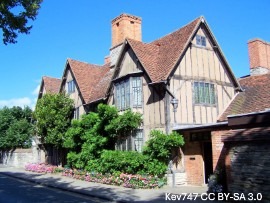
Stratford-upon-Avon home of Shakespeare's daughter is 'At Risk'
Lady Grange’s House repaired on St Kilda
.jpg)
National Trust for Scotland repairs stone cleit with link to famous island resident
Griff Rhys Jones on BBC Radio 4 Today programme
,_Green_Lane,_Derby.jpg)
The Victorian Society’s President unveiled its latest Top Ten Endangered Buildings 2026.
Need a MATE? Book your place now.

IHBC offers free webinars on applying for IHBC accreditation (Full & Associate).
UK Stained Glass Repository finds windows new homes

How are stained glass windows are rescued, stored and repurposed?
APPGEBE report sets high aims for quality
'Government must not sacrifice quality in drive to build 1.5m homes'
New measures protect Historic Shipwrecks from heritage crime

Underwater cultural heritage benefits from new HE guidance
How could the City of London skyline look in 6 years' time?

Visualisation shows approved planning applications as completed buildings
National Trust for Scotland calls for VAT cuts

Heritage neglect is encouraged by current policies
IHBC's 'Context' Issue 186 features Industrial Heritage

IHBC's members' journal reports on the challenges of conserving infrastructure
Book now for IHBC Annual School 2026

IHBC Annual School is taking place 18-20 June 2026 in Newcastle
RICHeS Research Infrastructure offers ‘Full Access Fund Call’
RICHeS offers a ‘Help’ webinar on 11 March
Latest IHBC Issue of Context features Roofing
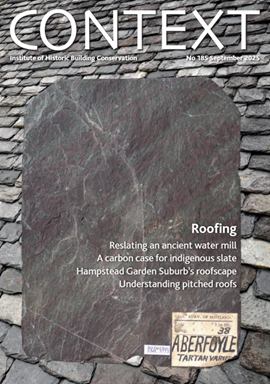
Articles range from slate to pitched roofs, and carbon impact to solar generation to roofscapes
Three reasons not to demolish Edinburgh’s Argyle House

Should 'Edinburgh's ugliest building' be saved?
IHBC’s 2025 Parliamentary Briefing...from Crafts in Crisis to Rubbish Retrofit
IHBC launches research-led ‘5 Commitments to Help Heritage Skills in Conservation’
How RDSAP 10.2 impacts EPC assessments in traditional buildings

Energy performance certificates (EPCs) tell us how energy efficient our buildings are, but the way these certificates are generated has changed.